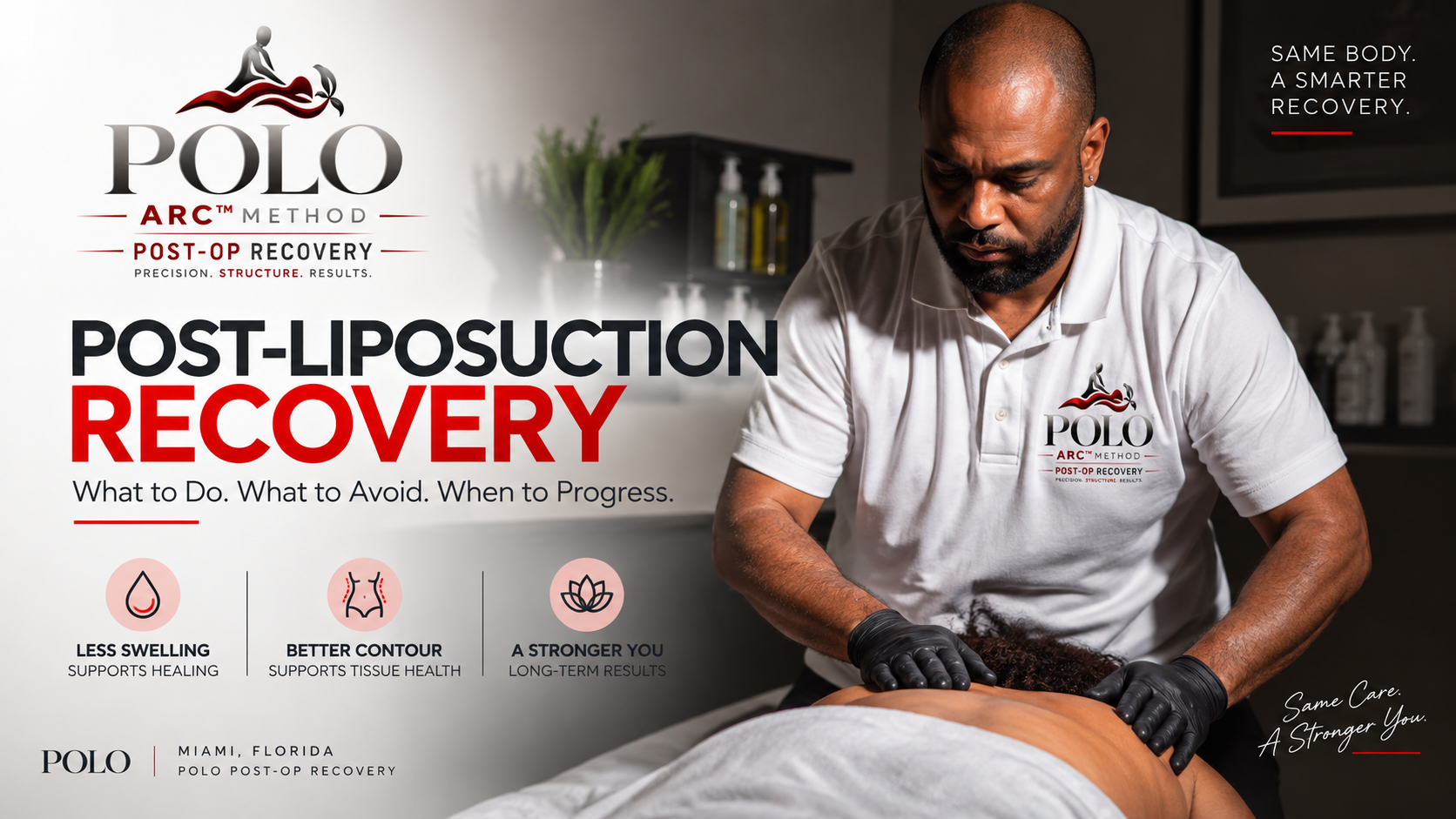
post-liposuction-massage
If you recently had liposuction, one of the first questions you may have about post-liposuction massage is:
When should I start post-operative massage?
In many recovery protocols, gentle lymphatic support may begin early, sometimes as soon as the day after surgery. But this does not mean that every patient should begin at exactly the same time—or that every type of massage is appropriate.
Your surgeon’s authorization, the procedure performed, your tissue response, and your overall condition should all be considered before treatment begins.
And there is an important distinction:
Starting early does not mean working aggressively.
After liposuction, your body is responding to controlled surgical trauma. Inflammation, swelling, tenderness, and temporary changes in tissue texture can all be part of the recovery process.
That is why the early stages of recovery should not be treated like a body-sculpting or aggressive contouring session.
At ARC™, we can begin supporting recovery early without trying to rush the biology.
When Can Massage Begin After Liposuction?
There is no single starting day that is right for every patient.
In some cases, and with the surgeon’s authorization, gentle lymphatic support may begin during the early stages of recovery. In other cases, the patient’s condition may indicate that treatment should be delayed, modified, or referred back to the surgical team.
Before beginning, several factors should be considered, including the type and extent of surgery, current swelling and inflammation, tissue sensitivity, incisions and drains when present, the surgeon’s specific instructions, and any signs that may require medical evaluation.
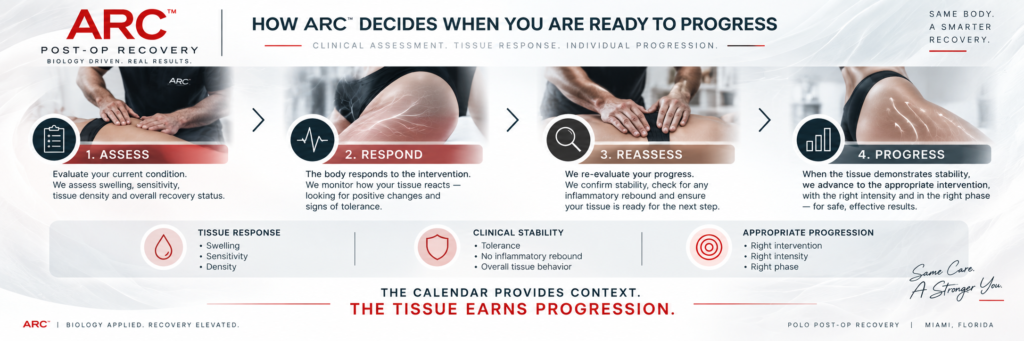
The calendar provides context. The tissue response tells us what is appropriate.
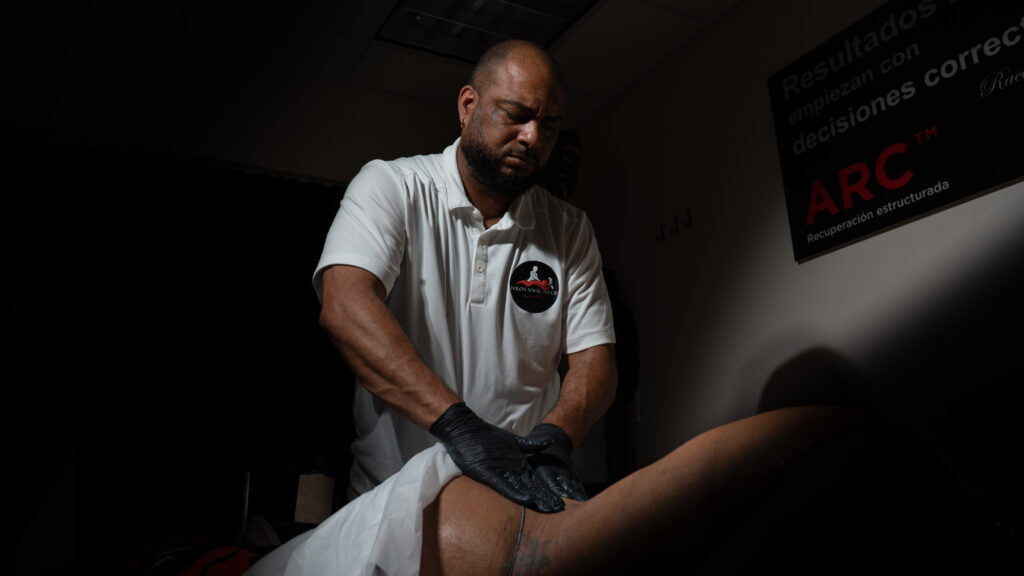
Not All Post-Liposuction Massages Are the Same
This is one of the most important things for a patient to understand.
“Post-operative massage” is a very broad term.
What may be appropriate during the early inflammatory stage is not necessarily the same type of treatment that may be appropriate once the tissues have reached greater stability.
During the early stages, more pressure does not mean better recovery.
Recently treated tissue does not need someone trying to aggressively “break up” every area that feels firm, nor should pain be used as proof that a treatment is working.
Treatment intensity should respond to the condition of the tissue and the biological stage of recovery.
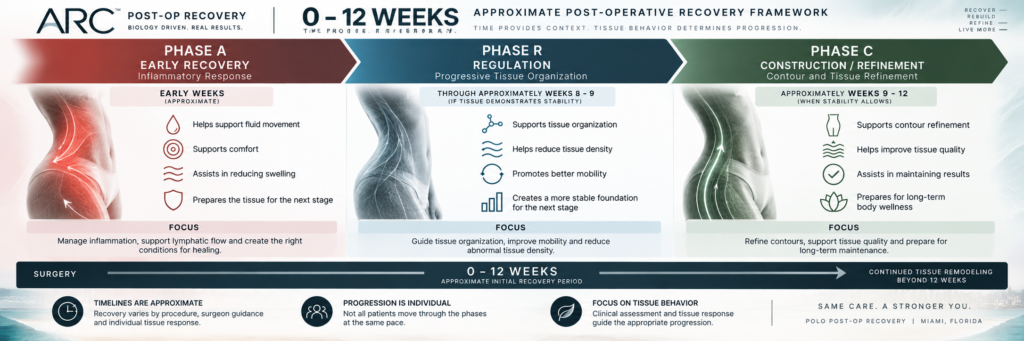
Within ARC™, this early stage corresponds to Phase A — Activation, where the focus is on supporting lymphatic flow, managing the inflammatory response, and protecting healing tissue as recovery begins.
What Is Actually Happening in Your Body After Liposuction?
Liposuction is not simply about removing fat. It is a surgical procedure, and the body responds by beginning a natural healing process.
During the early stages of recovery, swelling, fluid accumulation within the tissues, tenderness, bruising, and temporary changes in tissue texture may occur.
One common mistake is assuming that every firm or hard area felt shortly after surgery is automatically “fibrosis.”
Not every area of early firmness means established fibrosis.
Some of what a patient feels may be related to inflammation, swelling, and temporary tissue changes occurring during the healing process.
This is why post-operative treatment should begin with assessment—not force.
The Mistake of Thinking: “If It Hurts, It’s Working”
Post-operative massage should not be judged by how much pain a patient can tolerate.
Intense pain does not prove that fluid is moving better, that fibrosis is being prevented, or that the treatment is more effective.
During early recovery, overly aggressive treatment may unnecessarily irritate tissues that are still responding to surgery.
ARC™ follows a different principle:
Recovery does not accelerate because of anxiety.
Treatment should match the condition of the tissue and evolve as the body demonstrates sufficient stability to progress.
What Should Be Avoided Too Early After Liposuction?
During the early stages of recovery, patients should be cautious with aggressive treatments performed simply to reduce swelling faster or begin sculpting the body as soon as possible.
Within the ARC™ approach, we avoid prematurely using deep pressure, aggressive contouring, intense tissue manipulation, or technologies that are not appropriate for the patient’s current biological stage.
The goal is not to do as much as possible to the tissue.
The goal is to make the right intervention at the right time.
Instead of asking:
“What is the strongest treatment?”
A better question is:
“What does my tissue need today?”
When Should Massage Stop and the Surgeon Be Contacted?
A post-operative practitioner should not attempt to treat every change that appears after surgery.
If there are signs that may suggest a complication—such as suspected infection, an active hematoma, a significant seroma, wound opening, concerning skin changes, or symptoms that could indicate a vascular complication—treatment should be stopped and the patient should be referred to the surgeon or appropriate medical care.
The role of a post-operative practitioner is not to diagnose surgical complications. It is to recognize when something falls outside the appropriate scope of treatment and refer the patient when necessary.
Knowing when not to treat is also part of responsible recovery care.
The ARC™ Recovery Process After Liposuction
ARC™ organizes recovery according to the body’s biological response rather than relying only on a fixed calendar.
Phase 0 — Preparation
Recovery planning begins before surgery with education, realistic expectations, compression guidance, and preparation for the post-operative process.
Phase A — Activation
The early post-operative stage focuses on supporting lymphatic flow, managing the inflammatory response, and protecting healing tissue.
Phase R — Regulation
As the tissue response changes, treatment progresses with the goal of supporting tissue organization without unnecessary over-stimulation.
Phase C — Construction
Once sufficient biological stability is present, recovery can progress toward contour refinement, tissue quality, and more advanced aesthetic work.
The objective is not to reach Phase C as quickly as possible.
The objective is to progress when the tissue is ready.
Helpful Items During Liposuction Recovery
Recovery often involves more than what happens during a treatment session. Organization, comfort, mobility, and following your surgeon’s instructions all play a role in the hours between appointments.
Some simple items may make the recovery period more practical and comfortable. However, there is an important distinction between a general comfort item and something that directly affects the treated tissues.
Compression garments, foams, boards, and other products that apply pressure to surgical areas should not be selected simply because they are popular online. Their use should be based on your procedure, your surgeon’s instructions, and your individual recovery needs.
A product should support the recovery plan—not determine it.
Prepare Your Recovery Space Before Surgery
A well-prepared recovery space can make the first days after surgery easier to manage.
The goal is simple: keep essential items accessible, reduce unnecessary reaching or bending, and create a comfortable environment that supports the recovery instructions provided by your surgical team.
Here are three practical items patients may consider when preparing their recovery space:
Adjustable Wedge Pillow System
An adjustable wedge pillow system can provide flexible support for resting and positioning at home. Because positioning recommendations can vary depending on the procedure, always follow your surgeon’s specific instructions.
Extra-Long Grabber Reacher
A simple but useful recovery tool that can help keep everyday objects within reach and reduce unnecessary bending while moving around your recovery space.
Adjustable Overbed Table
A rolling bedside table can keep water, your phone, chargers, meals, and other everyday essentials conveniently accessible while resting at home.
Planning Liposuction in Miami? Start With a Recovery Plan
A structured recovery does not begin when swelling becomes a problem. It begins with understanding what your body may need before and after surgery.
If your liposuction procedure is coming up, ARC™ Phase 0 — Preparation can help you understand the recovery process, prepare your home environment, set realistic expectations, and arrive at surgery with a clearer plan for what comes next.
If you have already had surgery, a post-operative assessment can help determine where you are in your recovery and what level of support may be appropriate for your current tissue response.
ARC™ does not operate by calendar alone. It operates by tissue behavior.
Your surgeon remains responsible for your surgical and medical care. Our role is to provide structured post-operative recovery support that respects your procedure, your surgeon’s instructions, and the biological stage of your recovery.
If you are recovering from liposuction in Miami and are looking for a more structured approach to post-operative care, request your ARC™ Recovery Assessment.
Polo Post-Op Recovery | Miami, Florida
Frequently Asked Questions About Post-Liposuction Massage
How soon can lymphatic massage begin after liposuction?
Gentle lymphatic support may begin early in some recovery protocols, sometimes as soon as the day after surgery. However, there is no universal starting day for every patient. The procedure performed, your surgeon’s instructions, your overall condition, and your tissue response should all be considered before treatment begins.
Should post-liposuction massage hurt?
Post-liposuction massage should not be judged by how much pain a patient can tolerate. More pressure does not automatically mean a more effective treatment. During early recovery, treatment intensity should respect inflammation, tissue sensitivity, and the biological stage of healing.
Does hardness after liposuction always mean fibrosis?
No. Firmness during early recovery does not automatically mean established fibrosis. Swelling, inflammation, fluid within the tissues, and temporary changes in tissue texture can also contribute to areas feeling firm or hard. Proper assessment is important before deciding how the tissue should be treated.
Can post-operative massage replace follow-up with my surgeon?
No. Post-operative recovery support does not replace medical or surgical follow-up. Your surgeon remains responsible for your surgical care and for evaluating possible complications. A responsible post-operative practitioner should recognize when something falls outside the appropriate scope of treatment and refer the patient back to the surgeon or appropriate medical care.